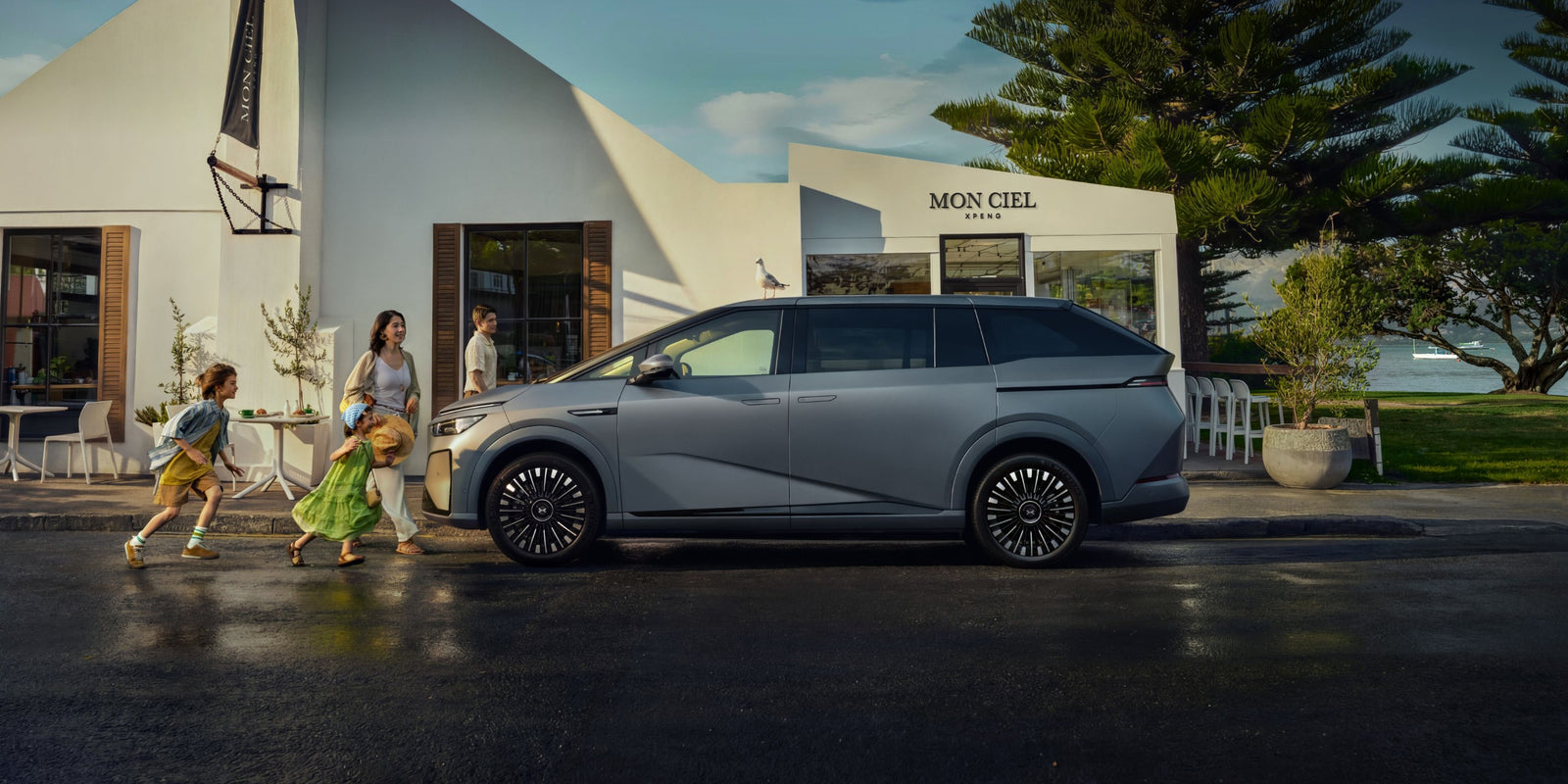
For buyers comparing a new EV in 2026, XPENG electric cars offer a useful mix of range, charging speed, safety equipment, cabin space, and software. The New G6 Long Range provides up to 525 km WLTP range, an 80.8 kWh LFP battery, and DC charging of up to 451 kW, taking the battery from 10% to 80% in about 12 minutes under suitable conditions. The AWD Performance version produces 358 kW and 660 Nm, reaching 100 km/h in 4.13 seconds. ANCAP awarded the G6 five stars in 2024, with 88% adult-occupant and 86% child-occupant scores.
Electric-car ownership is often judged by what happens between charging stops, so range and consumption deserve more attention than battery size alone. The New G6 Standard Range uses a 68.5 kWh LFP battery and records 16.6 kWh/100 km on 18-inch wheels, with a WLTP rating of 480 km. Moving to 20-inch wheels changes the figure to 470 km and consumption to 16.9 kWh/100 km, showing how wheel size can affect efficiency even when the battery and motor remain the same.
The Long Range version raises gross battery capacity to 80.8 kWh and delivers 525 km WLTP while consuming 17.9 kWh/100 km. Its 218 kW rear motor produces 440 Nm, and 0–100 km/h takes 6.7 seconds. Drivers covering 18,000 km a year at the official consumption figure would use about 3,222 kWh annually before charging losses, giving buyers a practical number for comparing home electricity costs with petrol expenditure.
Range becomes more useful when the car can recover energy quickly. The Standard Range accepts up to 382 kW DC, while Long Range and AWD Performance versions support up to 451 kW. All three are listed with a 10–80% charging time of about 12 minutes, although charger output, battery temperature, starting state of charge and ambient conditions can change the actual result.
A 12-minute 10–80% figure is not the time needed to charge from empty to full. It measures the section of the battery commonly used during motorway fast-charging stops, where charging power can remain much higher than it does near 100%.
That distinction matters on longer trips. Charging an 80.8 kWh pack from 10% to 80% represents roughly 56.6 kWh of gross battery capacity. Completing that session in 12 minutes requires very high average power across much of the charging window, which explains why an 800V electrical system and strong battery cooling matter more than a single peak-kW number printed on a specification sheet. XPENG states that the New G6 combines its high-voltage system with 5C LFP battery technology.
LFP chemistry also changes the battery discussion. It avoids nickel-rich chemistry and is widely used where thermal stability and long cycle life are priorities, although its energy density can be lower than some nickel-based alternatives. XPENG pairs LFP cells with high charging rates rather than limiting the chemistry to lower-powered versions; even the 358 kW AWD model uses an 80.8 kWh LFP pack and supports 451 kW DC charging.
That AWD version shows how the same platform can serve a different type of owner. Output rises from 218 kW in the Long Range model to 358 kW, torque increases from 440 Nm to 660 Nm, and the 0–100 km/h time falls from 6.7 to 4.13 seconds. WLTP range remains 510 km, only 15 km below the Long Range version, while official energy use increases to 18.4 kWh/100 km.
| New G6 version | Battery | WLTP range | DC peak | 10–80% | 0–100 km/h |
|---|---|---|---|---|---|
| RWD Standard Range | 68.5 kWh | 480 km* | 382 kW | 12 min | 6.94 sec |
| RWD Long Range | 80.8 kWh | 525 km | 451 kW | 12 min | 6.7 sec |
| AWD Performance | 80.8 kWh | 510 km | 451 kW | 12 min | 4.13 sec |
*480 km applies with 18-inch wheels; the published figure is 470 km with 20-inch wheels. The comparison also shows why buyers should check the exact wheel and powertrain configuration instead of assuming that every version of the same vehicle has identical range.
Performance does not remove everyday practicality. All three New G6 versions provide 571 litres of luggage space with the rear seats in use and 1,374 litres with them folded. The Standard Range has a listed kerb weight of 2,065 kg and a 470 kg payload, while the Long Range weighs 2,115 kg and allows 475 kg of payload. The AWD Performance reaches 2,220 kg, illustrating the mass added by its second motor and related hardware.
Vehicle dimensions and aerodynamics also affect how those numbers translate to daily use. XPENG lists a drag coefficient of 0.248 Cd for the New G6 and a turning radius of 5.8 metres. A lower-drag body reduces the energy required to maintain motorway speed, while the 5.8-metre turning radius matters in parking areas where a 4.7-metre-class SUV needs to manoeuvre without repeated corrections.
Cabin hardware follows the same approach to measurable equipment. The New G6 uses a 10.25-inch digital instrument display and a 15.6-inch central touchscreen, while Apple CarPlay, Android Auto, connected navigation, over-the-air software updating and app-based functions are listed in the Australian specification. Phone access can use Bluetooth, while UWB and NFC options provide additional methods of vehicle entry.
Software matters more when it reduces repeated tasks rather than adding menus. XPENG lists adaptive cruise control, lane centring, traffic assistance, lane-departure warning, blind-spot detection, rear cross-traffic alert and driver-state monitoring among G6 functions. Long Range and Performance specifications also list Auto Lane Change, while parking equipment can include surround-view cameras and automated parking functions, subject to local availability and road rules.
Assistance systems remain assistance systems. XPENG's Australian material states that the driver remains responsible for safe operation, including when parking or lane-support functions are active.
Independent crash testing provides a separate view from manufacturer equipment lists. ANCAP tested the G6 in 2024 and awarded it five stars, with 88% for adult occupant protection, 86% for child occupant protection, 81% for vulnerable road-user protection and 80% for safety assistance. The rating applies to all listed G6 variants sold from October 2024 and is scheduled to expire in December 2031 under the current ANCAP rating period.
ANCAP also records autonomous emergency braking for vehicle, pedestrian and cyclist scenarios, along with junction, crossing, reversing and head-on situations. Lane-keeping assistance, lane-departure warning and emergency lane keeping are standard within the assessed specification. The passenger compartment remained stable in Euro NCAP's 2024 frontal-offset assessment, adding an independent European reference point to the vehicle's published safety equipment.
Safety leads naturally into ownership support because a vehicle is normally kept for years rather than judged on a single test day. From 1 June 2026, eligible privately owned XPENG vehicles sold through XPENG ANZ receive a 7-year, unlimited-kilometre vehicle warranty. Commercial use is covered for 7 years or 160,000 km, while the traction battery, battery-management system, motor and intelligent power unit carry coverage for 8 years or 160,000 km, whichever comes first.
Support outside the workshop also matters for a newer automotive brand. XPENG Australia lists 24/7 roadside assistance across most of Australia, along with remote diagnostics that can allow technicians to examine vehicle fault data without first bringing the car into a repair facility. In July 2026, XPENG ANZ also said it was developing up to 50 sales outlets nationally and operating a genuine-parts warehouse in Melbourne with FedEx support.
Charging at home adds another layer to ownership. Each New G6 version supports 11 kW AC charging; XPENG lists approximately 7.3 hours from 5% to 100% for the Standard Range and 9.2 hours for the 80.8 kWh Long Range and Performance versions. An overnight home session can therefore cover normal weekday charging without depending on 382–451 kW public equipment.
The vehicle can also supply electricity externally. The Australian specification lists vehicle-to-load functionality, reaching up to 6 kW on Long Range and Performance configurations. That capacity can operate suitable camping equipment, appliances or other compatible devices where permitted, adding a use case that has little to do with acceleration or infotainment but can matter during travel and outdoor use.
Costs still depend on how and where the car is charged. At an illustrative household electricity rate of A$0.30 per kWh, 3,222 kWh of annual energy corresponding to 18,000 km at 17.9 kWh/100 km would cost about A$967 before charging losses. At A$0.60 per kWh on public charging, the same theoretical energy rises to about A$1,933, so charging location can change annual electricity expenditure by almost 100% in this simplified example.
Buyers comparing XPENG electric cars should therefore use their own annual distance, home tariff, public charging price and motorway usage rather than relying on one national cost estimate. A driver covering 8,000 km per year has a different ownership pattern from someone travelling 30,000 km, even when both purchase the same 80.8 kWh vehicle.
Model choice follows the same logic. Standard Range suits drivers who can use 470–480 km WLTP range and prefer the lower-capacity 68.5 kWh battery; Long Range raises the figure to 525 km without adding a second motor; Performance trades some efficiency for 358 kW, 660 Nm and a 4.13-second 0–100 km/h time. Published specifications make those differences measurable before a test drive.