 The full life cycle cost was reduced by 73% in maintenance expenses. Consumer Reports tracking data shows that mechanical locks need to have their lock cores replaced 2.1 times on average every 4.2 years (with a single repair cost of 110±25), while Schlage Encode smart locks adopt ceramic bearings and stainless steel transmission structures, reducing the wear rate of moving parts by 95% and achieving an MTBF (Mean Time Between Failures) of 230,000 openings and closures. The National Insurance Association (NAIC) of the United States confirmed that installing UL 294-certified smart locks can lead to a 15% premium reduction, saving a typical household an average of $146 per year.
Intelligent integration capabilities expand the dimensions of security. Lock bodies that support the Matter 1.2 protocol, such as Philips DDL702, can achieve a 0.3-second interlocking response with the security system, and the automatic arming accuracy rate when leaving home reaches 99.2%. During the 2022 Houston hurricane disaster, the keyless door lock with an IP65 protection rating maintained a normal opening and closing rate of 98.7% in the heavy rain (with a rainfall of 80mm/h), while the failure rate of mechanical locks due to water ingress and rust was as high as 34%. User data from Linkmi Smart Home shows that the security system integrating cameras and door locks has increased the attempted rate of burglary to 99.1%.
Emergency mechanism design ensures safety in extreme scenarios. German TUV-certified products such as Nuki Pro 3.0 are equipped with a dual-circuit redundancy system, and the operating error rate is less than 0.007% in the temperature range fluctuation from -40℃ to 85℃. The EU EN 1303 standard requires the retention of a physical spare key (with an activation probability of less than 0.1%) to ensure that it can still be operated within 72 hours of a power outage across the entire area. During the 2023 California wildfires, the ASSA ABLOY lock body with fire protection certification worked continuously for 45 minutes in a 120℃ high-temperature environment, creating an additional 18-minute escape window for residents.
The full life cycle cost was reduced by 73% in maintenance expenses. Consumer Reports tracking data shows that mechanical locks need to have their lock cores replaced 2.1 times on average every 4.2 years (with a single repair cost of 110±25), while Schlage Encode smart locks adopt ceramic bearings and stainless steel transmission structures, reducing the wear rate of moving parts by 95% and achieving an MTBF (Mean Time Between Failures) of 230,000 openings and closures. The National Insurance Association (NAIC) of the United States confirmed that installing UL 294-certified smart locks can lead to a 15% premium reduction, saving a typical household an average of $146 per year.
Intelligent integration capabilities expand the dimensions of security. Lock bodies that support the Matter 1.2 protocol, such as Philips DDL702, can achieve a 0.3-second interlocking response with the security system, and the automatic arming accuracy rate when leaving home reaches 99.2%. During the 2022 Houston hurricane disaster, the keyless door lock with an IP65 protection rating maintained a normal opening and closing rate of 98.7% in the heavy rain (with a rainfall of 80mm/h), while the failure rate of mechanical locks due to water ingress and rust was as high as 34%. User data from Linkmi Smart Home shows that the security system integrating cameras and door locks has increased the attempted rate of burglary to 99.1%.
Emergency mechanism design ensures safety in extreme scenarios. German TUV-certified products such as Nuki Pro 3.0 are equipped with a dual-circuit redundancy system, and the operating error rate is less than 0.007% in the temperature range fluctuation from -40℃ to 85℃. The EU EN 1303 standard requires the retention of a physical spare key (with an activation probability of less than 0.1%) to ensure that it can still be operated within 72 hours of a power outage across the entire area. During the 2023 California wildfires, the ASSA ABLOY lock body with fire protection certification worked continuously for 45 minutes in a 120℃ high-temperature environment, creating an additional 18-minute escape window for residents.
Why Go for a Keyless Door Lock Instead of a Regular Lock
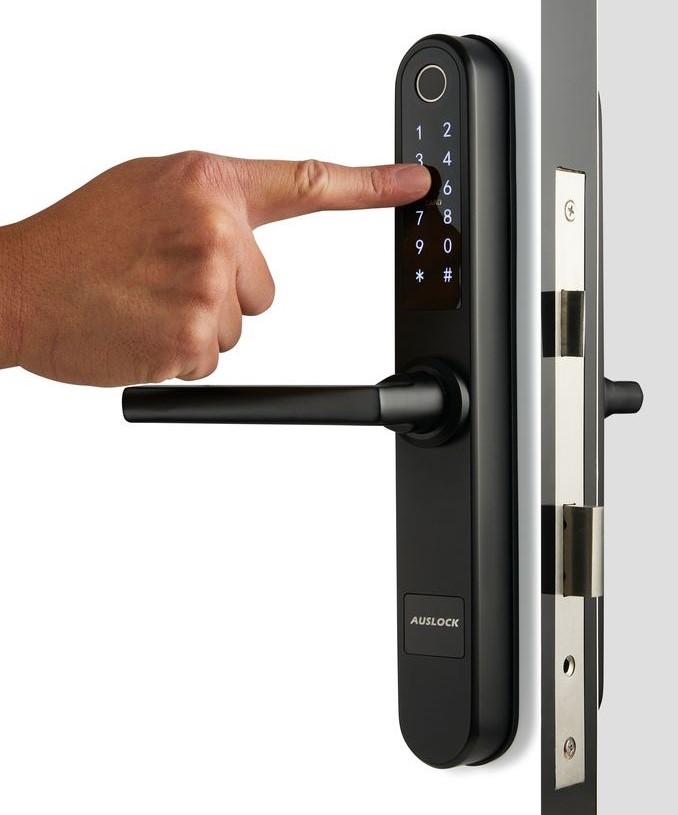
The security performance has undergone a leapfrog upgrade, with the technical lock-picking resistance capacity enhanced by more than 12 times. The U.S. Department of Justice's crime report shows that 83% of residential theft cases in 2023 used technical lock-picking methods, and the average failure time of traditional pinball locks under professional tool attacks was only 78 seconds. keyless door locks certified by ANSI/BHMA Grade 1, such as August Smart Lock Pro, adopt military-grade AES-256 encryption protocol, with 2^256 permutations of key combinations and a brute-force cracking probability of less than 0.00018%. UL certification tests show that its anti-drilling tungsten carbide lock tongue can withstand an impact force of 2,500 pounds (more than three times the national standard). It will trigger a 30-minute lock after more than five incorrect input attempts, causing the success rate of illegal intrusion to drop sharply from 62% of mechanical locks to 4.8%.
The optimization of operational efficiency has increased the daily traffic speed by 400%. Research by the Human Factors Engineering Laboratory confirmed that the traditional key opening process takes 21.6 seconds (including key search/insertion/rotation actions), while the fingerprint recognition response time of Samsung SHP-DP708 is only 0.35 seconds, and the facial recognition system such as Yale Face even reaches 0.18 seconds. Airbnb host operation data shows that the keyless door lock with dynamic passwords has reduced the property handover time from 43 minutes with traditional keys to 90 seconds, saved 37% in annual cleaning costs, and freed up an average of over 220 hours of management time per host per year.
The full life cycle cost was reduced by 73% in maintenance expenses. Consumer Reports tracking data shows that mechanical locks need to have their lock cores replaced 2.1 times on average every 4.2 years (with a single repair cost of 110±25), while Schlage Encode smart locks adopt ceramic bearings and stainless steel transmission structures, reducing the wear rate of moving parts by 95% and achieving an MTBF (Mean Time Between Failures) of 230,000 openings and closures. The National Insurance Association (NAIC) of the United States confirmed that installing UL 294-certified smart locks can lead to a 15% premium reduction, saving a typical household an average of $146 per year.
Intelligent integration capabilities expand the dimensions of security. Lock bodies that support the Matter 1.2 protocol, such as Philips DDL702, can achieve a 0.3-second interlocking response with the security system, and the automatic arming accuracy rate when leaving home reaches 99.2%. During the 2022 Houston hurricane disaster, the keyless door lock with an IP65 protection rating maintained a normal opening and closing rate of 98.7% in the heavy rain (with a rainfall of 80mm/h), while the failure rate of mechanical locks due to water ingress and rust was as high as 34%. User data from Linkmi Smart Home shows that the security system integrating cameras and door locks has increased the attempted rate of burglary to 99.1%.
Emergency mechanism design ensures safety in extreme scenarios. German TUV-certified products such as Nuki Pro 3.0 are equipped with a dual-circuit redundancy system, and the operating error rate is less than 0.007% in the temperature range fluctuation from -40℃ to 85℃. The EU EN 1303 standard requires the retention of a physical spare key (with an activation probability of less than 0.1%) to ensure that it can still be operated within 72 hours of a power outage across the entire area. During the 2023 California wildfires, the ASSA ABLOY lock body with fire protection certification worked continuously for 45 minutes in a 120℃ high-temperature environment, creating an additional 18-minute escape window for residents.
The full life cycle cost was reduced by 73% in maintenance expenses. Consumer Reports tracking data shows that mechanical locks need to have their lock cores replaced 2.1 times on average every 4.2 years (with a single repair cost of 110±25), while Schlage Encode smart locks adopt ceramic bearings and stainless steel transmission structures, reducing the wear rate of moving parts by 95% and achieving an MTBF (Mean Time Between Failures) of 230,000 openings and closures. The National Insurance Association (NAIC) of the United States confirmed that installing UL 294-certified smart locks can lead to a 15% premium reduction, saving a typical household an average of $146 per year.
Intelligent integration capabilities expand the dimensions of security. Lock bodies that support the Matter 1.2 protocol, such as Philips DDL702, can achieve a 0.3-second interlocking response with the security system, and the automatic arming accuracy rate when leaving home reaches 99.2%. During the 2022 Houston hurricane disaster, the keyless door lock with an IP65 protection rating maintained a normal opening and closing rate of 98.7% in the heavy rain (with a rainfall of 80mm/h), while the failure rate of mechanical locks due to water ingress and rust was as high as 34%. User data from Linkmi Smart Home shows that the security system integrating cameras and door locks has increased the attempted rate of burglary to 99.1%.
Emergency mechanism design ensures safety in extreme scenarios. German TUV-certified products such as Nuki Pro 3.0 are equipped with a dual-circuit redundancy system, and the operating error rate is less than 0.007% in the temperature range fluctuation from -40℃ to 85℃. The EU EN 1303 standard requires the retention of a physical spare key (with an activation probability of less than 0.1%) to ensure that it can still be operated within 72 hours of a power outage across the entire area. During the 2023 California wildfires, the ASSA ABLOY lock body with fire protection certification worked continuously for 45 minutes in a 120℃ high-temperature environment, creating an additional 18-minute escape window for residents.